
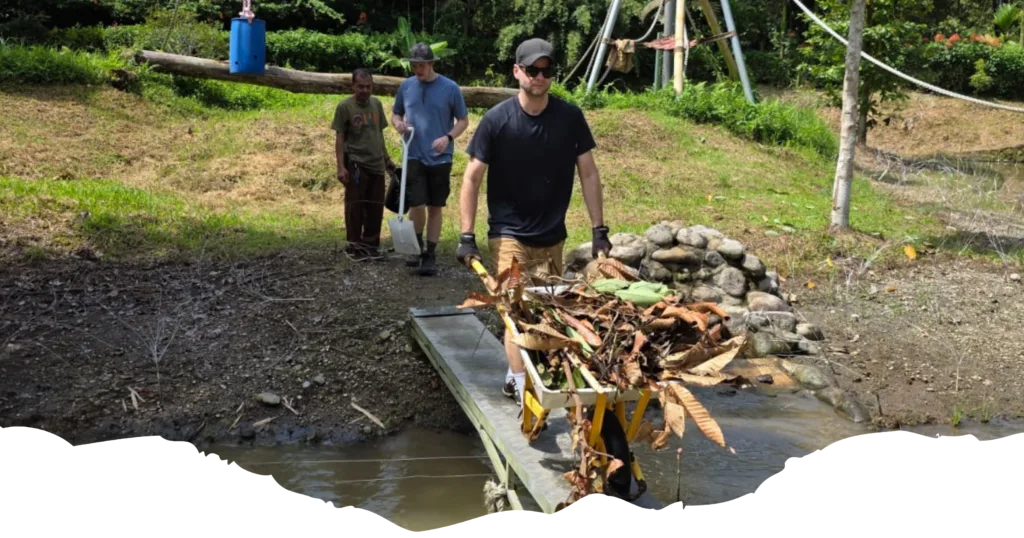
Guardians in Action: From Toronto Zoo to Sumatra

What does it take to protect wildlife in a rapidly changing world? It takes expert collaboration, connection to global conservation initiatives, impactful discoveries and people willing to act. Building on its role as a world-class zoo, the Toronto Zoo is becoming a leading conservation science organization—redefining what it means to serve wildlife. Expanding these efforts is critical to the Zoo’s commitment to know better and do better for wildlife, both at home and around the world.
As the Toronto Zoo’s charity partner, we help bring that commitment to life by supporting opportunities for the Zoo’s dedicated Wildlife Care team to work alongside on-the-ground conservation organizations. Through these experiences, they share their knowledge, learn from others, and help protect endangered species and their habitats. One of those opportunities took Andy all the way to Sumatra. Thanks to a generous donor, he participated in a once-in-a-lifetime conservation experience.
Read more about his journey here.
From Toronto Zoo to Sumatra
by guest author, Andy Cockburn, Wildlife Care Keeper Gr 4, Toronto Zoo
If you’ve ever wondered what it feels like to travel to the other side of the planet, I can confirm: it’s a journey! After a five-hour flight to Vancouver, a 16-hour flight to Singapore, and another hour-and-a-half flight to Sumatra, I finally arrived in Medan—my final destination.
Was I exhausted? Absolutely. Was it worth every minute? Without a doubt.
Medan greeted me with warm tropical air, bustling streets, and something I wasn’t expecting to love as much as I did—the beautiful call to prayer echoing across the city each morning. Waking up to that peaceful soundtrack became one of my favourite parts of the trip and a daily reminder of this incredible opportunity to experience a completely different part of the world.
One reason for my trip was to volunteer at PanEco Foundation’s Orangutan Haven, a sanctuary in North Sumatra, Indonesia (near the city of Medan). Orangutan Haven provides a safe, permanent home for orangutans that can never be reintroduced into the wild due to illness, blindness or other physical challenges. The sanctuary’s goal is to provide the orangutans under their care with the highest possible quality of life, while educating and empowering visitors so they can contribute to the long-term survival and critical conservation efforts to save this critically endangered species.
As a Wildlife Care Keeper at the Toronto Zoo who works closely with our orangutans, this experience was especially meaningful. While I was eager to roll up my sleeves and help with hands-on projects, it was equally rewarding to exchange professional knowledge with the dedicated keepers at Orangutan Haven. We may work on opposite sides of the world, but we share the same goal: providing the very best care for these incredible apes.
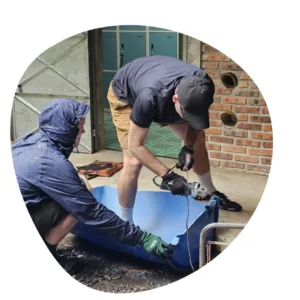
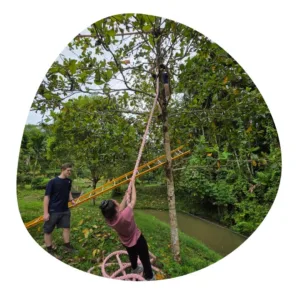
Our volunteer work kept us busy every day. We helped revitalize the orangutans’ habitats, painted buildings around the sanctuary, and built enrichment items to stimulate natural behaviours, keeping the orangutans mentally and physically engaged. It was fascinating to compare animal husbandry techniques and ideas, training approaches, and problem-solving strategies-and I walked away from this experience, having learned just as much as I hope I was able to share.
One of the most memorable projects was organizing a mock animal escape drill, which gave me the opportunity to train the Orangutan Haven keepers on emergency response procedures similar to those we use at the Toronto Zoo. Through the drill, I was able to share best practices to ensure both animal welfare and staff safety. It was amazing to know that I was able to help prepare the staff and share my knowledge.
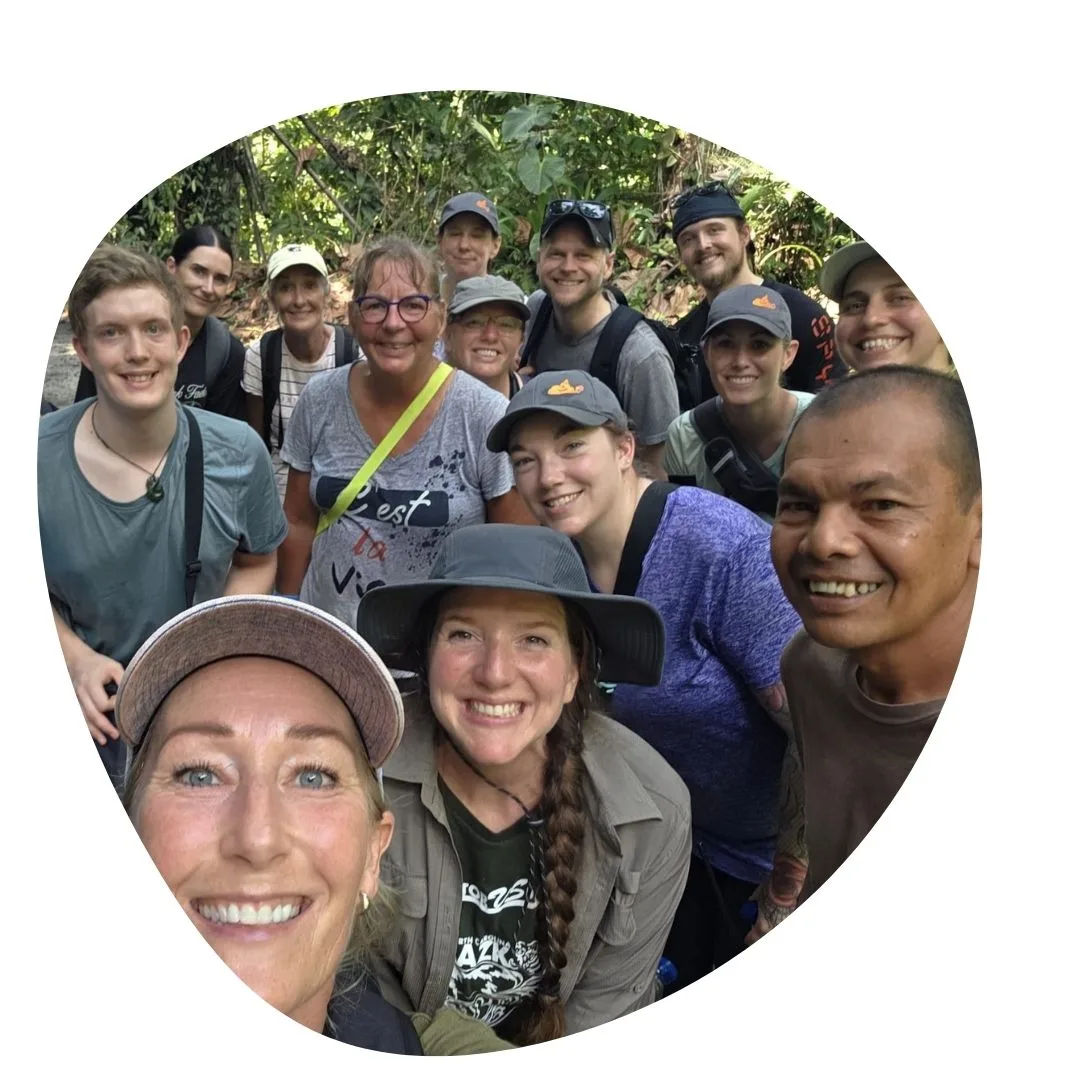
After our time at Orangutan Haven, we headed to Bukit Lawang, a beautiful little riverside town perched on the edge of Gunung Leuser National Park-one of the last places on earth with orangutans living in the wild. The rainforest didn’t disappoint.
If there were ever a place that instantly makes you slow down and appreciate nature, this is it.
During our treks, we had the incredible privilege of spotting a wild orangutan with her tiny, one-month-old baby. Watching them move effortlessly through the trees, completely at home in the rainforest, was one of those rare moments that you know you’ll remember forever. Seeing orangutans in the wild after spending my career caring for them at the Toronto Zoo was incredibly special—it offered a whole new appreciation for the intelligence, agility, and resilience of these remarkable apes.
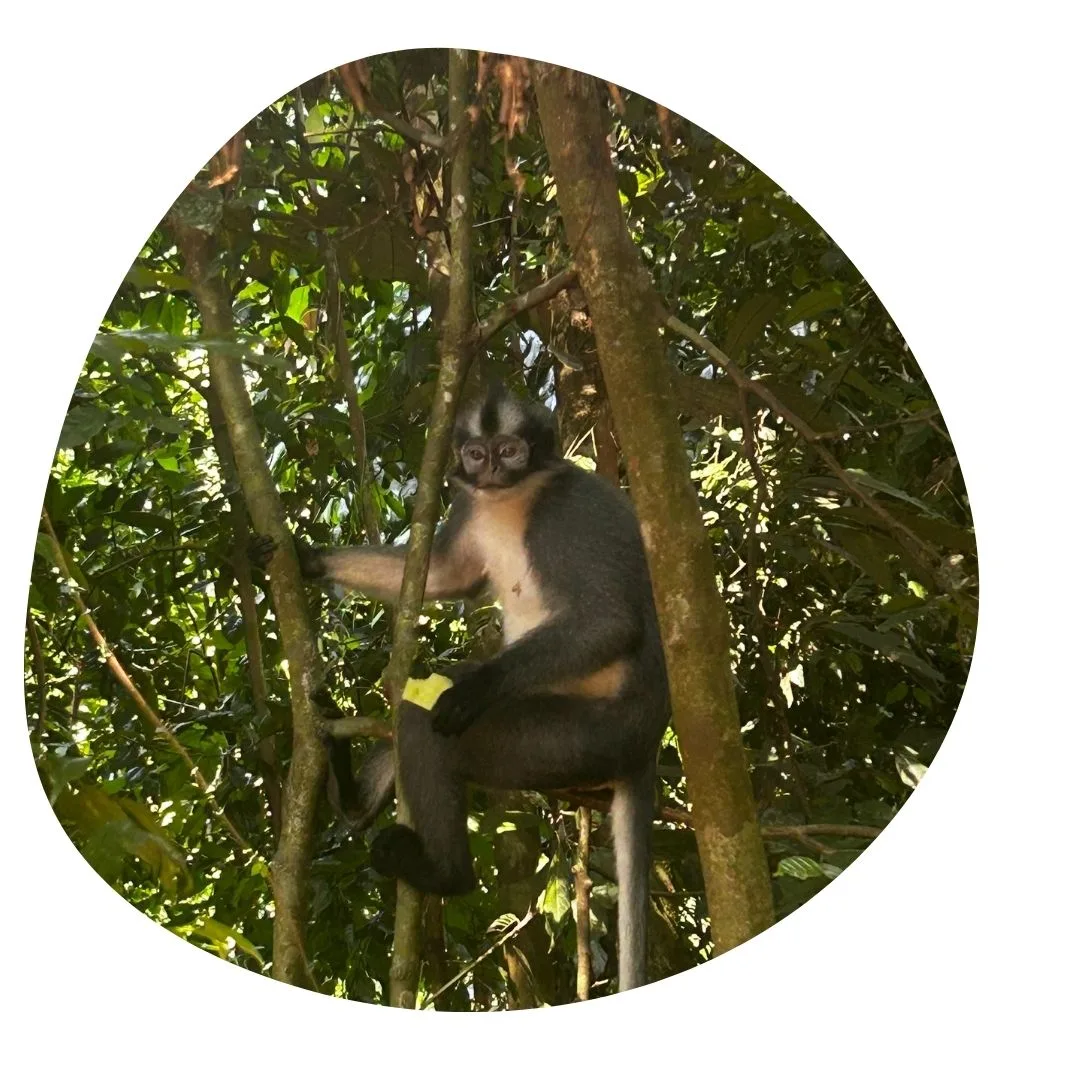
Just when we thought the wildlife couldn’t get any better, we had the opportunity to spend some time with rangers from the Sumatran Tiger Ranger Project, a community-led conservation initiative in North Sumatra, Indonesia. The project is dedicated to protecting the critically endangered Sumatran tiger and the incredible biodiversity of Gunung Leuser National Park. Rangers spend countless hours patrolling the rainforest, removing illegal snares, monitoring wildlife, collecting field data, and helping reduce conflict between people and wildlife. Although seeing a Sumatran tiger is extraordinarily rare, their deep knowledge of the forest means they’re constantly tracking various signs of wildlife.
As we chatted with the rangers, they mentioned that a herd of wild Sumatran elephants had recently been spotted nearby. There was no way we could pass up an opportunity like that, so we set off in search of them. After a hot, sweaty hike through the forest—38 degrees plus humidity! —we were rewarded with an unforgettable sight.
Seeing wild Sumatran elephants in their natural habitat was simply breathtaking. We were the only people sharing the jungle with these magnificent animals. Everyone instinctively stopped talking, because words couldn’t really do this view justice. In this moment I was reminded that protecting one species, like the Sumatran tiger, helps safeguard an entire ecosystem—and all the incredible wildlife that calls it home.
Looking back, this was so much more than your standard work trip. It was a chance to contribute to meaningful conservation work, collaborate with fellow animal care professionals, experience a completely different culture, and witness some of the world’s most endangered wildlife.
It took more than 30 hours to get there, involved plenty of sweat, sore muscles, and thousands of ant bites, but I would do it all again in a heartbeat. I am so grateful for donor support, which made this incredible opportunity possible!
Wilding Endangered Species Preservation Fund
With fewer than 15,000 remaining in the wild, the Sumatran orangutan continues to lose rainforest habitat to oil palm plantations, logging, mining, and infrastructure development.
Through our Wilding Endangered Species Preservation Fund, the Toronto Zoo committed $250,000 over ten years to support orangutan conservation and rehabilitation through PanEco Foundation’s Sumatran Orangutan Conservation
Programme (SOCP). PanEco works with local partners in Sumatra to protect orangutans and their rainforest habitat through SOCP.
To date, SOCP has received $125,000 from the Toronto Zoo to advance science-based conservation efforts, including the establishment of new wild populations, landscape-level protection, sustainable livelihoods, and environmental education. This support also helps sustain Orangutan Haven, a sanctuary where orangutans who cannot be released into the wild live in naturalistic island habitats and serve as ambassadors for their wild counterparts.
Funding contributes to ongoing care, security, and habitat maintenance at Orangutan Haven, including food, medical treatment, enrichment, staffing, island upkeep, water systems, moats, and infrastructure. It has also supported recovery efforts following several major landslides that devastated the Orangutan Quarantine and Rehabilitation Centre on November 27, 2024, after exceptionally heavy rainfall caused extensive damage to key infrastructure, including the main veterinary clinic and orangutan enclosures.
We are agents of change.
We learn, and we teach.
We are Guardians.